By August, Peace Region contractors are up against the clock to finish overhead jobs before the weather turns. Local crews are pushing hard to repair commercial roofing, swap out parking lot lights, paint storefronts, and catch up on plant maintenance across Grande Prairie and Peace River. With such a short working window, you can see the rental lifts moving down the highway from one jobsite straight to the next.
To rent the right equipment, you have to look at the actual ground you are standing on, the overhead layout of the building, what equipment is already parked in the way, and how your crew needs to position themselves to work safely. Following aerial lift safety practices means renting the machine that fits the physical reality of your site, rather than trying to force a bad setup to work.
At Rentco, we have spent sixty years helping contractors, towns, plants, and farmers pick the right lifts for jobs up here. The first step is to understand how the crew needs to work, including whether the machine can be positioned directly below the working site or needs additional reach to clear a roofline, loading area, equipment, uneven ground, or another site obstacle.
The First Question Should Not Be About the Height
A customer usually leads with their target working height, but that single number rarely specifies which machine to load onto the trailer.
For indoor tasks like swapping high-bay warehouse lights, you only need vertical movement. A scissor lift provides a wide, stable deck with ample capacity for tools and heavy components, provided you can park directly underneath. This works well for straight building façades, overhead bay doors, and exterior painting on flat, solid ground.
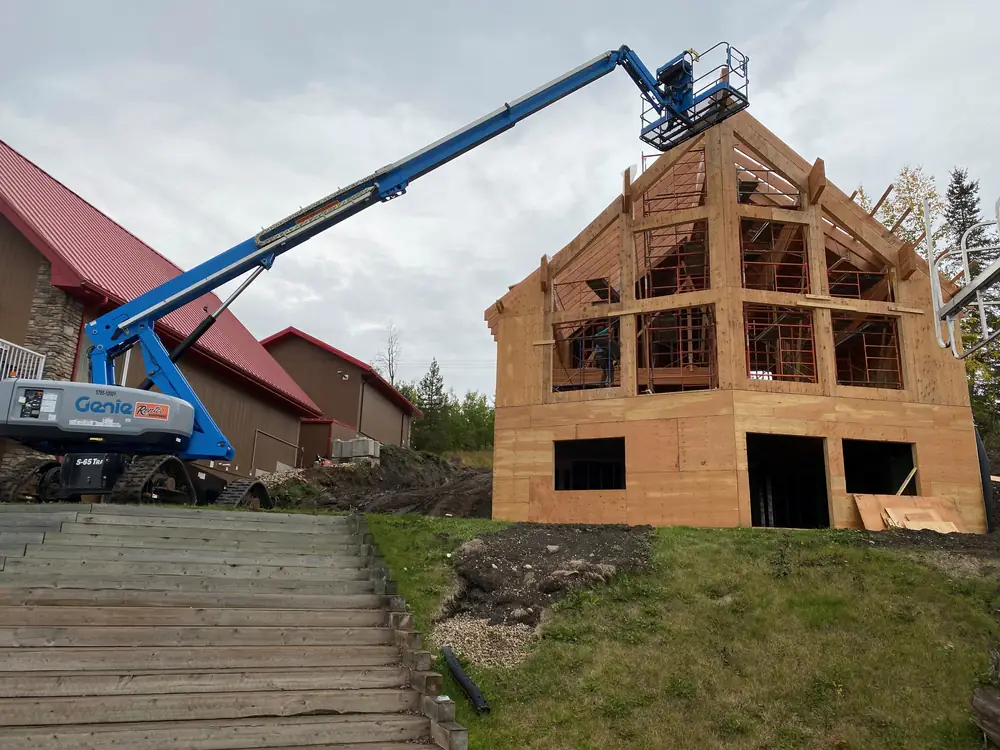
The strategy changes completely when physical obstacles block your path. Deep roof overhangs, loading docks, retaining walls, or parked service vehicles can prevent a scissor lift from reaching the work area. On rural sites outside Peace River, steep drainage ditches or soft gravel shoulders create identical challenges. For these spots, a boom lift allows you to reach up and over obstacles without constantly repositioning the base.
The lift with the highest reach spec will not save you money if it is fighting the site layout. The machine that lets you access the work safely from a stable position finishes the job fastest.
The Jobsite Influences the Decision
You can have two identical jobs at the exact same working height that require two completely different machines.
A millwright crew working inside a Grande Prairie shop with flat concrete, wide bay doors, and clear access can use a tight electric scissor lift. It keeps the setup simple. They can roll along the slab, elevate, and get straight to work without dealing with ruts or awkward reach angles.
Take that same height requirement and put it on a siding repair job outside Dawson Creek. Suddenly, the wall sits behind uncompacted pit-run gravel or a pile of rig mats that cannot be moved. Now, you have to plan how that machine is going to travel from the delivery trailer to the actual work face.
If your lift matches the height but cannot navigate the physical tight spots on the ground, your crew might get stuck before they ever clip their harnesses in.
Summer Conditions Can Change the Plan
Anyone who has logged a summer in the Peace Region knows our weather can change completely before the lunch break. A dead-calm morning can turn into a high-wind afternoon, wildfire smoke can drop visibility to zero in an hour, and dry gravel yards turn into dust bowls the moment loaders and haul trucks start moving.
Those sudden shifts can hit workers at height hard. Exterior sign installs, commercial painting, roofline patches, and high-level plant maintenance all require sharp attention the moment the breeze picks up or the sky gets hazy.
Operators need to respect the manufacturer limits and site rules before raising that platform into the air. Trying to push through bad weather to save an hour can cost a lot more if things go sideways.
Good Lift Safety Starts Before the Platform Goes Up
The safest operations start with a thorough walk-around on the dirt before anyone touches a joystick.
Every operator must complete a pre-shift inspection on the machine. That means physically checking the controls, looking over the guardrails, verifying tire pressures or track tension, testing the alarms, checking the emergency lowering valves, and scanning for hydraulic leaks or structural cracks. A minor issue on the ground can become a massive problem when you are staring down at it from forty feet up.
Fall protection requirements differ for boom and scissor lifts. Before a boom lift moves onto the site, every worker in the basket must have an approved personal fall arrest or travel restraint system, with the correct lanyard length and attachment to a designated factory anchor point. In a properly designed scissor lift, the enclosed guardrail system provides the required fall protection, so OSHA does not generally require workers to wear a harness while they remain inside the platform.
Do not forget to look up for power lines. Working around rural shops, farm yards, alleys, and industrial parks can put lifts dangerously close to overhead lines. Locate those electrical hazards before the machine arrives.
Let Rentco Equipment Help You Plan Your Lift Rental
Getting the right rental starts with a blunt description of your jobsite reality. Tell us the actual working height, what you are driving on, what obstacles we have to clear, how much weight is going in the basket, and if you are shooting straight up or reaching out horizontally. Whether you need an electric scissor lift for indoor slab work or a knuckle boom to reach up and over obstacles on tighter outdoor sites, we know how our local dirt, unpredictable weather, and tight project timelines impact your bottom line.
Rentco Equipment has spent decades helping contractors, farmers, sawmills, and towns across the Peace Region match the right lift to actual northern site conditions. To get the right lift matched to your site without any guesswork, contact us today.