
Peak summer in the Peace Region brings high heat, dry ground, dust, and strict wildfire restrictions to active construction sites. Managing heat and wildfire risk is now a standard part of job planning across Western Canada and affects foundation decisions more than most crews expect.
In the Peace Region, soil conditions ranging from clay to muskeg make foundation selection more complex than in many other parts of Canada.
Rentco Equipment has navigated these summer conditions across Grande Prairie, Peace River, Fort St. John, Dawson Creek, and surrounding areas for over 60 years. That experience matters when foundation choices directly impact site mobility, installation timelines, and long-term structural stability.
Ground Screws vs. Traditional Foundation Work in Northern Alberta Conditions
Dry summer ground can look simple until trucks, skid steers, compactors, and support vehicles start moving across it. Dust builds quickly on a construction site, visibility drops, air filters load faster, and water demand increases for dust suppression and fire preparedness.
Traditional concrete foundations can add more movement to the site. Excavation, spoil handling, forming, concrete delivery, finishing, curing time, and cleanup all need space and coordination. Every step adds traffic and another chance for delay.
Ground screws can reduce that disruption when they suit the soil conditions, structural requirements, and project size. They often require minimal excavation, fewer truck movements, and less cleanup. Unlike concrete, ground screws can provide immediate load bearing capacity once installed. This allows crews to start building sooner.
Ground Screws and Minimal Site Disruption
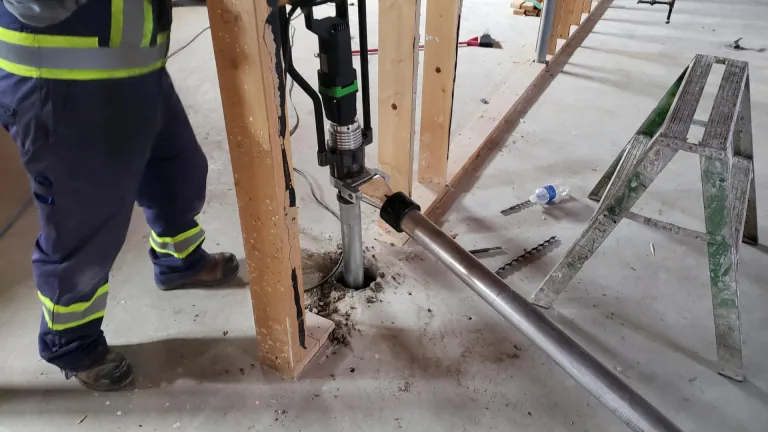
Ground screws use galvanized steel shafts with helical blades. In simple terms, a screw pile is a steel foundation anchor that is drilled directly into the ground rather than cast in place. Specialized equipment turns them into the ground to a planned depth. The pile size, depth, and installation approach depend on engineering, soil, load bearing capacity, and the structure being supported.
Screw piles are often used for decks, walkways, fencing, small buildings, solar arrays, signage, equipment platforms, temporary offices, storage structures, and lighter agricultural or commercial builds. On many projects, their main advantage is minimal site disruption.
The installation avoids large holes, heavy concrete forming, and extended curing required with traditional concrete footings. This can mean reduced labor, quicker installation, and less disturbance around existing structures or active work areas. In the right ground, ground screws can reach a stable layer and create a durable foundation system with strong resistance to movement.
Rentco supports this type of work by renting the Screwco pile drive auger with torsion bar and selling Screwco ground screws when a screw pile foundation is suitable for the site and structure.
Concrete Foundations and Concrete Footings Still Have Their Place
Concrete foundations remain the best approach for many permanent structures, heavier loads, slab-based designs, engineered industrial builds, and municipal requirements. Traditional concrete footings are proven, strong, and widely understood. When they are properly designed, formed, reinforced, poured, and cured, they can provide the strength required for larger structures and specific engineering requirements.
The tradeoff is the amount of planning involved. Traditional concrete foundations require a long equipment lineup, active site coordination, more labour, and a number of fixed steps before the next stage can begin. In high heat, this means that each machine will need closer attention. Cooling packages need to stay clean. Hydraulic temperature needs to be watched. Dust buildup around radiators, air intakes, and engine compartments can turn a normal workday into a service call. For projects where traditional concrete is the better fit, Rentco’s concrete services can support the work with practical site experience across the Peace Region.
Ground Screws vs. Concrete: What Matters on Site
The ground screws vs. concrete decision should be made before equipment is booked. Both methods can build a strong foundation but they affect the construction site in different ways.
Ground screws suit projects where speed, minimal excavation, and limited site disruption are priorities. Concrete footings suit heavier loads, slab designs, and structures with specific engineering requirements.
Ground screws can be cost effective when quick installation, minimal excavation, and immediate use are priorities. They can also support sustainability goals because they reduce soil disturbance and can often be removed or adjusted more easily than concrete. They may be suitable where access is tight, around additions, or near existing structures.
Concrete footings may be better when the design calls for mass, spread bearing, slab integration, or a specific engineered form. Soil conditions also matter. Loose soil, clay, muskeg, rocky terrain, and variable ground can all change the foundation system, installation method, and engineering needed. Muskeg is particularly common across the Peace Region and requires careful assessment. Ground screws can be engineered to reach stable bearing layers beneath it, but soil conditions should always be confirmed before installation begins. Certified professionals should review the site, loads, and structural requirements before choosing the best approach.
Quick Installation Still Depends on Planning
Quick installation still requires careful planning. A successful project needs layout precision, proper measurements, safe access, correct equipment, and clear support from the team doing the work.
For ground piles, the plan should confirm pile size, depth, soil conditions, equipment access, and the structure being built. For concrete, the plan should confirm excavation, form work, reinforcement, concrete supply, finishing timing, curing required, and site cleanup.
Weather conditions, heat, dust, water support, and fire restrictions can affect both methods. The difference is how much each method depends on extended site activity. Ground screws often allow crews to build immediately. Concrete usually requires more time before the next stage can begin.
Build Strong Foundations With Rentco
Not sure which foundation method suits your project? Rentco’s team has supported contractors, industrial sites, and commercial crews across the Peace Region since 1963, from Grande Prairie to Fort St. John. We can help you compare ground screw and concrete options based on your site conditions, structural requirements, and timeline. Contact Rentco today or give us a call to talk through your options with our experienced team.